















You've heard the term thrown around in board meetings and tech newsletters. Agentic AI. Everyone's talking about it, but most explanations dive straight into technical jargon that doesn't help you make a business decision.
Here's what you actually need to know: and why it matters for your company right now.
What Agentic AI Actually Is
Agentic AI is artificial intelligence that acts on your behalf. It doesn't wait for your prompt. It understands a goal, figures out how to achieve it, takes action across multiple systems, and adjusts its approach based on results.
Think of it this way: ChatGPT writes an email when you ask. Agentic AI writes the email, sends it, monitors responses, follows up with non-responders, and adjusts the messaging strategy: all without you lifting a finger.
The difference is autonomy. Traditional AI responds. Agentic AI initiates.

Why This Isn't Just Another AI Buzzword
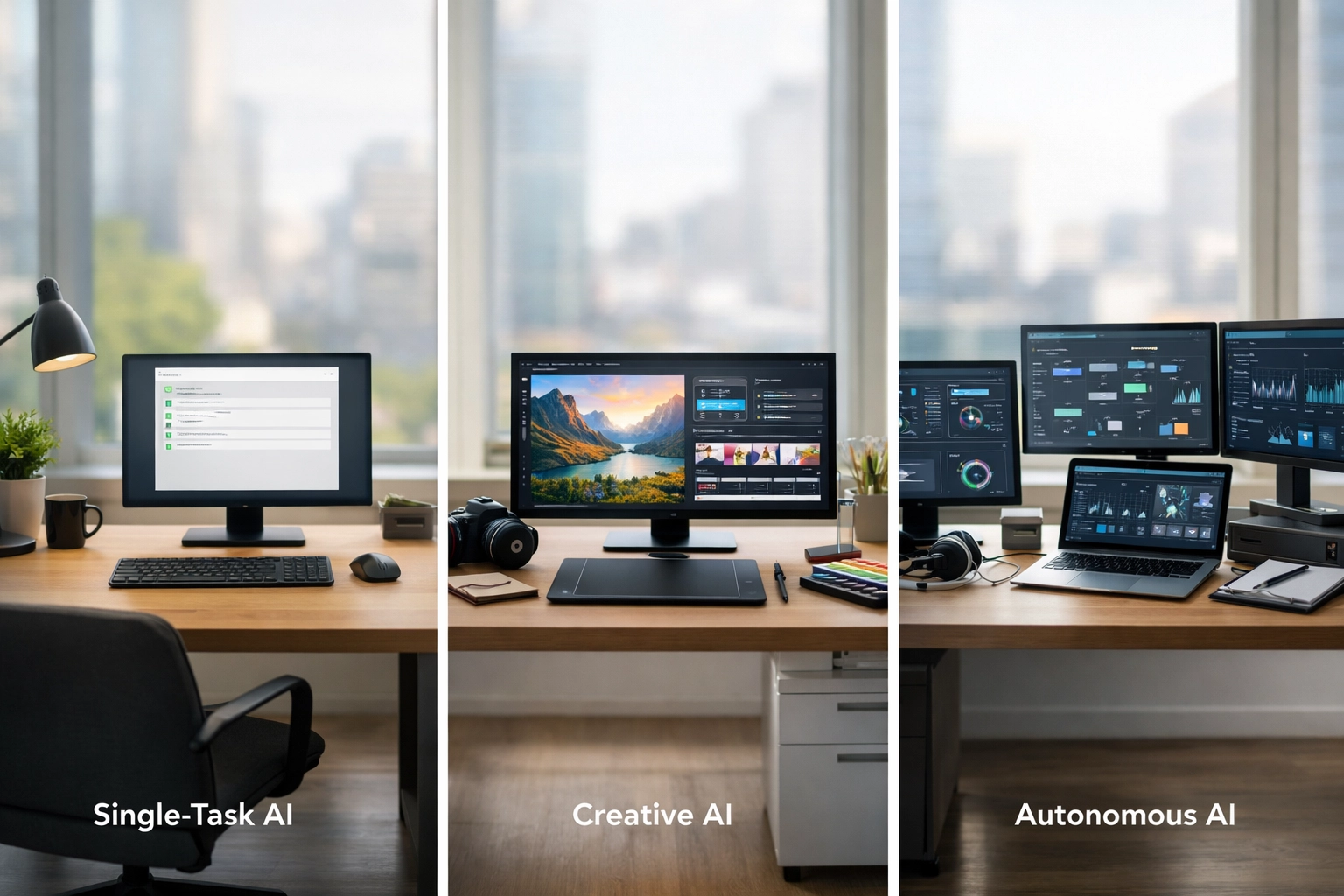
You're managing three types of AI systems right now, whether you realize it or not:
Traditional AI handles single tasks. Your spam filter. Image recognition in your security cameras. One input, one output, done.
Generative AI creates content based on prompts. It writes marketing copy, generates code, designs images. But you're still in the driver's seat, giving instructions for each output.
Agentic AI operates independently. You set the objective. It handles everything else: planning, execution, course correction. It's proactive, not reactive.
Here's a concrete example: Your customer success team uses generative AI to draft responses to support tickets. That's helpful. Agentic AI would monitor tickets, identify patterns, create resolution workflows, implement solutions, measure success rates, and refine its approach over time. No one tells it to do these steps. It figures them out.
The Five-Step Engine Under the Hood
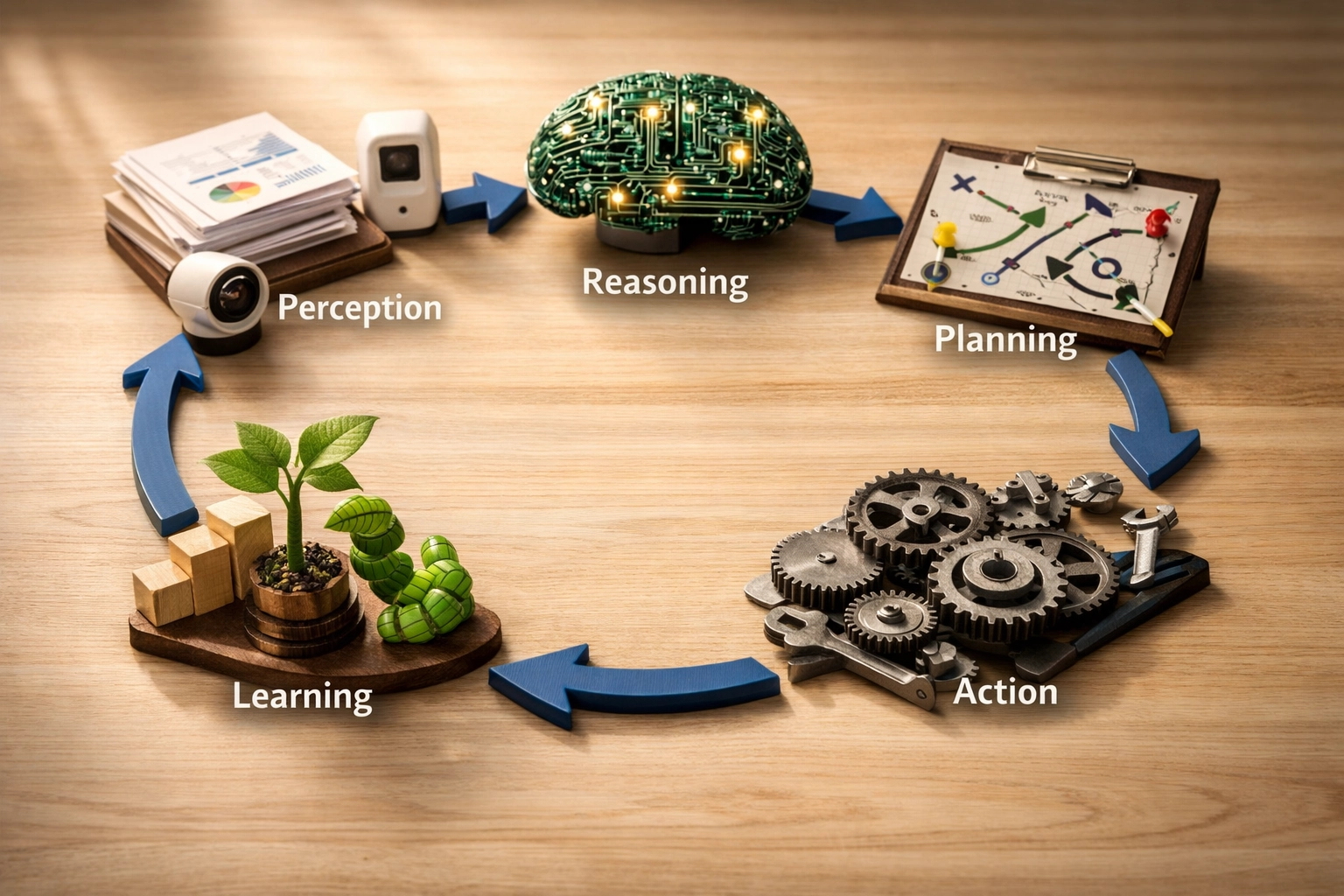
Agentic AI runs on a continuous cycle. Understanding this helps you evaluate whether a vendor is selling you real agentic capabilities or rebranded automation.
Perception: The system pulls information from everywhere. Your CRM, financial systems, customer feedback, API calls, third-party data sources. It's constantly scanning.
Reasoning: It interprets what's happening. Not just data points, but context. Why is churn up this month? What do these support tickets have in common? What's the real problem here?
Planning: It maps out the next steps. Not a single action, but a sequence. What needs to happen first, second, third to achieve the goal?
Action: It executes across your systems. Updates records. Sends communications. Triggers workflows. Coordinates between platforms.
Learning: It evaluates outcomes and improves. What worked? What didn't? How should it adjust its approach next time?
The brain powering this cycle is a large language model: the same technology behind ChatGPT, but architected for decision-making instead of conversation.
What It Can Actually Do for Your Business
Strip away the hype and focus on capabilities that move your metrics.
Handle complex workflows without human oversight. Your operations team spends hours coordinating between systems: updating Salesforce when a deal closes, triggering onboarding sequences, notifying relevant teams, updating dashboards. Agentic AI manages the entire chain.
Adapt to changing conditions in real-time. Markets shift. Customer behavior changes. Agentic AI doesn't need someone to update its rules. It observes new patterns and adjusts its approach accordingly.
Integrate across your entire tech stack. It doesn't live in one application. It works across all of them simultaneously, connecting data and actions that your team currently handles manually.
Operate in unstructured environments. Most business challenges don't fit neat templates. Agentic AI thrives in messy, variable situations where traditional automation fails.
A Real-World Example That Makes Sense
Let's get specific. Your security operations center gets 500 alerts per day. Your team investigates each one manually: checking logs, correlating signals across systems, assessing threat levels, deciding on response actions.
Deploy agentic AI and here's what changes:
An alert triggers. The AI immediately pulls relevant data from your security tools, cloud infrastructure, access logs, and threat databases. It correlates signals to determine if this is a real threat or noise. It assesses the attack likelihood based on your environment and current threat landscape. If it's credible, it executes mitigation actions: isolating affected systems, blocking IPs, alerting the right team members with full context.
Your team reviews the AI's actions afterward, but they're not stuck in reactive mode anymore. They're working on strategic improvements while the AI handles detection and immediate response.
This isn't hypothetical. Security teams are running this today.
What This Means for Your Strategy
You're probably asking the right question: Should I care about this now, or is this 2027 technology?
You should care now. Here's why.
Your competitors are already testing agentic AI for customer success, sales operations, financial planning, and product development. The companies that figure out deployment first will have 12-18 months of operational advantage while everyone else catches up.

But: and this matters: most organizations aren't ready to deploy it effectively. You need clean data architectures. Clear goal frameworks. Integration capabilities across your systems. Risk management protocols.
This is where strategic planning beats rushed implementation. You don't need to deploy agentic AI next quarter. You need to understand where it creates leverage in your business and build the foundation that makes deployment successful when you're ready.
The Questions You Should Ask Next
Start here:
Where does your team spend time coordinating between systems? Those handoffs are prime territory for agentic AI.
What business processes require multiple steps and judgment calls? If it's too complex for simple automation but too repetitive for senior staff, that's your opportunity.
What would change if you had 24/7 intelligent execution across your operations? Don't think about saving time. Think about new capabilities you don't have today.
How ready is your technical infrastructure? Can systems talk to each other? Is your data accurate and accessible? Do you have APIs where you need them?
These aren't questions you answer alone. You need someone who understands both the technology and your business model: someone who's deployed AI systems before and knows where the pitfalls hide.
Your Next Move
Agentic AI will reshape how businesses operate over the next three years. The companies that deploy it strategically will pull ahead. The ones that ignore it will spend 2027 playing catch-up.
You don't need to become an AI expert. You need to understand where it creates leverage in your business and build toward that methodically.
If you're trying to figure out how agentic AI fits into your technical strategy: or whether you should prioritize it over other initiatives: let's talk. I work alongside CTOs, founders, and technical leaders to cut through the noise and build strategies that actually move your business forward.
No slide decks. No consulting theater. Just straight talk about what works and what you should do next.